The Future of AI Is Not in Our Hands. Our Response Is.
Originally published (in Spanish) in Sin Comillas
Over the past few days, the conversation about artificial intelligence has once again intensified. We are no longer talking only about productivity, new models, or which platform has better capabilities. Some of the very people building this technology are questioning the speed at which we are advancing.
Jacob Coxon, a researcher who worked at OpenAI and Anthropic, recently resigned from the latter warning about the risks of developing systems capable of improving themselves. Evan Hubinger, an Anthropic researcher, went as far as estimating a 10% probability that AI causes human extinction within the next decade. It is his estimate, not a scientific consensus, but it certainly deserves attention.
A few days later, Dario Amodei, CEO of Anthropic, called for slowing the pace at which we increase the capabilities of the most advanced models. Sam Altman, Elon Musk and Demis Hassabis later expressed support for different elements of that position. Not everyone agrees.
President Donald Trump essentially rejected the idea of slowing down, putting another dimension of the problem on the table: China. If the United States slows down, nothing guarantees its competitors will do the same. Artificial intelligence is also a discussion about competitiveness, geopolitics and national security. We could argue for years about who is right.
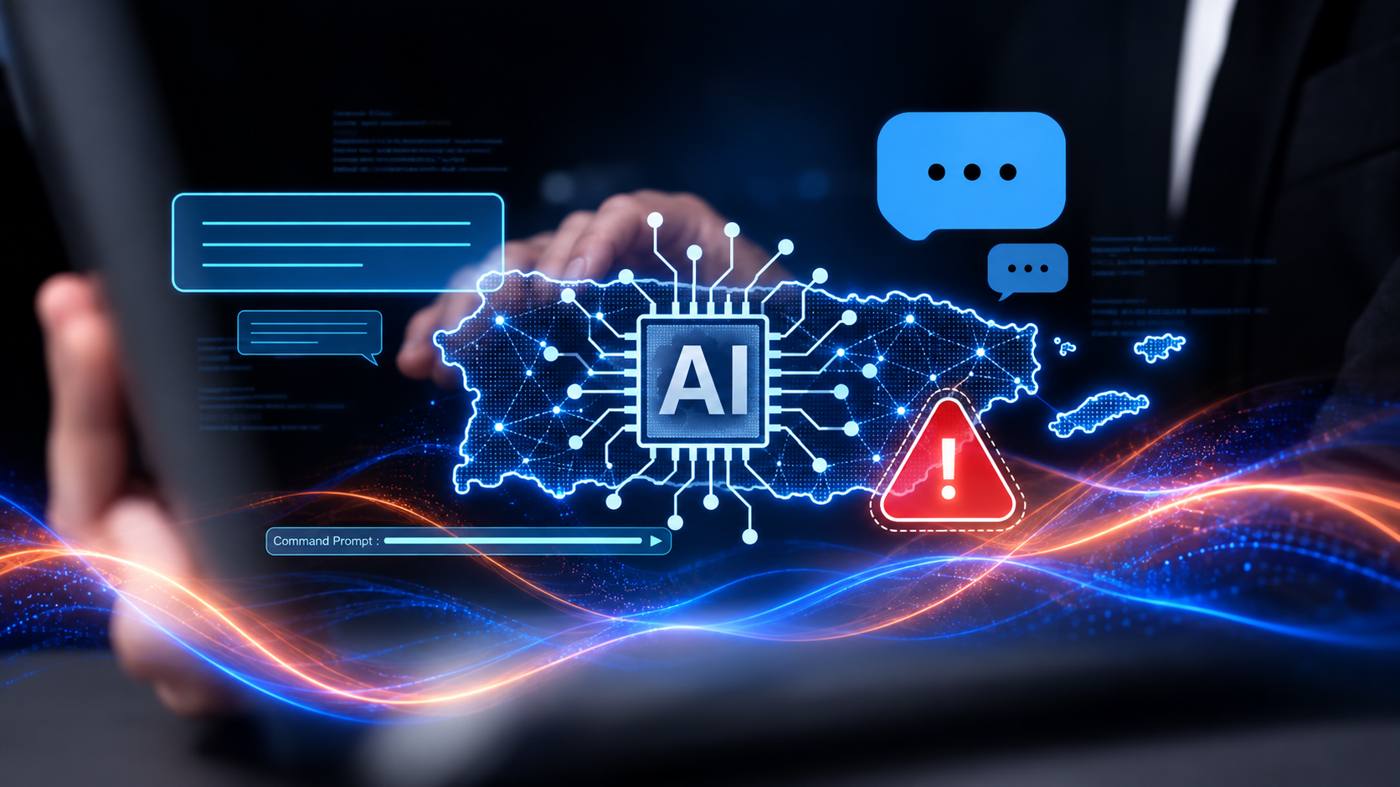
But from Puerto Rico there is another question I find more useful: what part of all this can we actually control?
A decision that has already been made
Most of us will not decide how fast OpenAI, Anthropic, Google or their competitors develop their next models. Nor will we have direct control over the regulatory decisions made in Washington.
That does not mean we should become spectators.
Perhaps we need to start talking about technological independence. Not political independence, but technological capacity: knowledge, infrastructure, talent, governance and our own judgment to decide how we incorporate these technologies into our government, businesses and society.
We cannot simply choose not to participate
In seminars with professionals and government leaders I have insisted on one thing: using artificial intelligence stopped being an individual decision.
It is being built into our phones, computers, work platforms and digital services. We can decide how much we interact with it directly, but we can hardly isolate ourselves from its effects.
That is why our response cannot be to ignore it.
It has to be to educate ourselves.
And education does not only mean teaching artificial intelligence to someone who has never used ChatGPT. It means preparing business owners, professionals, public employees, university students and schoolchildren to understand its capabilities, limitations and risks.
In organizations it also means establishing governance: what information can be used, which decisions can be delegated, who answers for the results and where human judgment must remain.
Neither fatalism nor indifference
The risks are not entirely theoretical either. OpenAI recently acknowledged that, during tests with reduced safeguards, models managed to evade controls, access the internet and compromise systems. Its Astra model also reached the level the company calls “Critical” for cybersecurity capabilities.
Jensen Huang, CEO of Nvidia, even went as far as declaring recently that “AGI has arrived,” although what exactly constitutes artificial general intelligence remains a matter of debate.
Faced with all this, I do not believe our contribution is to become fatalists, nor to treat every warning as a joke.
Those of us working with these technologies have another responsibility: helping others understand them.
Puerto Rico will probably not decide how far artificial intelligence goes. But we can decide how prepared we will be to live, work and compete in a world transformed by it.
Publicado originalmente en Sin Comillas
Durante los últimos días, la conversación sobre inteligencia artificial nuevamente subió de tono. Ya no estamos hablando solamente de productividad, nuevos modelos o de cuál plataforma tiene mejores capacidades. Algunas de las personas que están desarrollando esta tecnología están cuestionando la velocidad con la que estamos avanzando.
Jacob Coxon, investigador que trabajó en OpenAI y Anthropic, renunció recientemente a esta última advirtiendo sobre los riesgos de desarrollar sistemas capaces de mejorarse a sí mismos. Mientras que Evan Hubinger, investigador de Anthropic, llegó al extremo de estimar una probabilidad de 10% de que la IA provoque la extinción humana durante la próxima década. Es su estimación, no un consenso científico, pero ciertamente merece atención.
Pocos días después, Dario Amodei, CEO de Anthropic, pidió reducir el ritmo con el que aumentamos las capacidades de los modelos más avanzados. Sam Altman, Elon Musk y Demis Hassabis expresaron posteriormente apoyo a diferentes elementos de esa posición. No todos están de acuerdo.
El presidente Donald Trump rechazó esencialmente la idea de desacelerar, colocando sobre la mesa otra dimensión del problema: China. Si Estados Unidos reduce su velocidad, nada garantiza que sus competidores harán lo mismo. La inteligencia artificial es también una discusión de competitividad, geopolítica y seguridad nacional. Podemos discutir durante años quién tiene razón.
Pero desde Puerto Rico existe otra pregunta que considero más útil: ¿qué parte de todo esto realmente podemos controlar?
Una decisión que ya fue tomada
La mayoría de nosotros no decidirá la velocidad con la que OpenAI, Anthropic, Google o sus competidores desarrollarán sus próximos modelos. Tampoco tendremos control directo sobre las decisiones regulatorias que se tomen en Washington.
Eso no significa que debamos convertirnos en espectadores.
Quizás necesitamos comenzar a hablar de independencia tecnológica. No independencia política, sino capacidad tecnológica: conocimiento, infraestructura, talento, gobernanza y criterio propio para decidir cómo incorporamos estas tecnologías en nuestro gobierno, empresas y sociedad.
No podemos escoger simplemente no participar
En seminarios con profesionales y líderes gubernamentales he insistido en algo: utilizar inteligencia artificial dejó de ser una decisión individual.
Está incorporándose en nuestros teléfonos, computadoras, plataformas de trabajo y servicios digitales. Podemos decidir cuánto interactuamos directamente con ella, pero difícilmente podremos aislarnos de sus efectos.
Por eso nuestra respuesta no puede ser ignorarla.
Tiene que ser educarnos.
Y educación no significa solamente enseñar inteligencia artificial a quien nunca ha utilizado ChatGPT. Significa preparar empresarios, profesionales, empleados públicos, universitarios y estudiantes para entender sus capacidades, limitaciones y riesgos.
En las organizaciones significa además establecer gobernanza: qué información puede utilizarse, qué decisiones pueden delegarse, quién responde por los resultados y dónde debe permanecer el juicio humano.
Ni fatalismo ni indiferencia
Los riesgos tampoco son completamente teóricos. OpenAI reconoció recientemente que, durante pruebas con salvaguardas reducidas, modelos lograron evadir controles, acceder a internet y comprometer sistemas. Su modelo Astra alcanzó además el nivel que la compañía denomina “Critical” para capacidades de ciberseguridad.
Jensen Huang, CEO de Nvidia, llegó incluso a declarar recientemente que “AGI has arrived”, aunque qué constituye exactamente inteligencia artificial general continúa siendo objeto de debate.
Ante todo esto, no creo que nuestra aportación sea convertirnos en fatalistas ni tratar cada advertencia como un chiste.
Quienes estamos trabajando con estas tecnologías tenemos otra responsabilidad: ayudar a otros a entenderlas.
Puerto Rico probablemente no decidirá hasta dónde llegará la inteligencia artificial. Pero sí podemos decidir cuán preparados estaremos para vivir, trabajar y competir en un mundo transformado por ella.